Chapter 6: When the Neighborhood Finally Spoke
The Willow Creek clubhouse had never been so crowded.
On January 8, more than eighty homeowners attended a special association meeting.
Some stood along the walls.
Others brought folding chairs from home.
A few had not attended an HOA meeting in ten years.
The Christmas Eve incident had drawn their attention, but the financial questions had brought them together.
Patricia arrived ten minutes late.
She wore a dark cardigan, carried a thick folder, and walked directly toward the front table.
For years, that seat had been hers.
This evening, Margaret was presiding under the board’s adopted procedures.
Patricia stopped beside the chair.
Margaret explained that the board had called the meeting to address the financial review, governance concerns, and a proposed membership vote concerning Patricia’s position.
Patricia demanded to take control of the proceedings.
Margaret declined.
The exchange was brief.
No one shouted.
That seemed to unsettle Patricia more than an argument would have.
The association’s attorney explained the process.
Homeowners would be allowed to ask questions.
The independent accountant’s preliminary findings would be summarized.
Patricia would have an opportunity to respond.
Any removal vote would follow the association’s bylaws and applicable North Carolina law.
Samuel presented the financial discrepancies.
He did not accuse Patricia of crimes.
He explained which payments lacked documentation, which approvals could not be verified, and why the association needed a complete accounting.
A projector displayed the relevant transactions.
The room grew quiet.
Several residents recognized the consulting expenses from budget summaries they had previously ignored.
One elderly homeowner asked why the association had raised annual dues while paying thousands of dollars for services nobody could identify.
Another wanted to know why requests for financial records had been delayed.
A retired nurse described receiving repeated violation notices after questioning the clubhouse maintenance budget.
A former board member recalled being excluded from discussions that should have involved all directors.
The stories differed in detail.
But together they revealed a pattern.
Patricia had not simply been strict.
She had created an atmosphere in which ordinary homeowners were afraid to question the people managing their own money.
Then Linda approached the microphone.
She did not show the Christmas video.
Everyone already knew what had happened.
Instead, she described the work that went into the annual gathering.
She spoke about neighbors who had lost spouses, adults who lived far from their families, and residents for whom the clubhouse dinner was the one holiday event they could count on.
She explained that the party had been properly reserved and paid for through voluntary contributions.
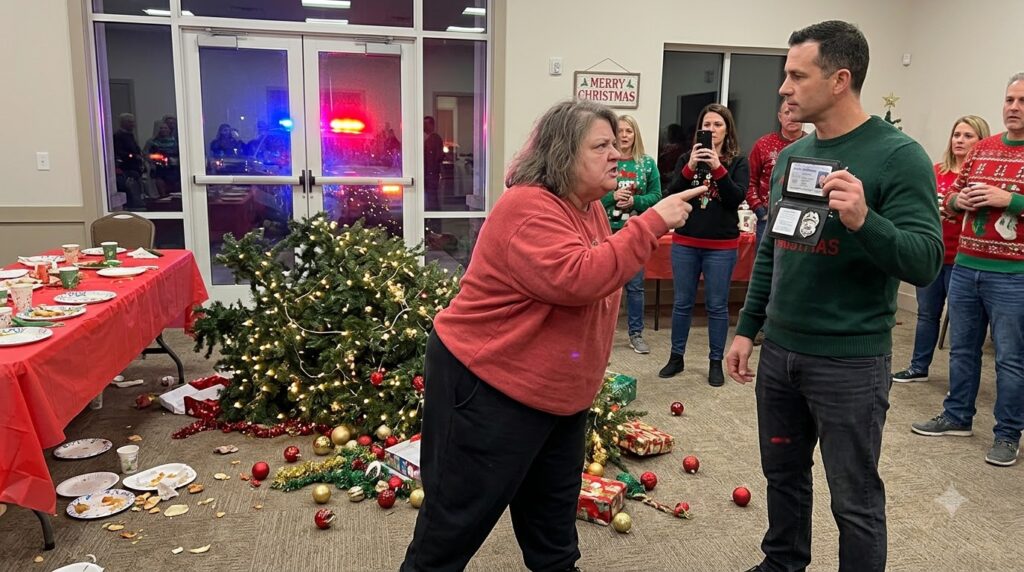
Then she described watching Patricia destroy it.
Linda’s voice trembled only once.
She said the hardest part had not been losing the tree or the food.
It had been seeing someone treat other people’s happiness as something she had the right to take away.
The room remained silent.
Patricia stared at the table.
When her opportunity to respond came, she defended her record.
She cited years of unpaid work, difficult decisions, and residents who had complained about enforcement but rarely volunteered to help.
Some of those points were fair.
Serving on an HOA board could be thankless.
Rules did require enforcement.
Volunteers often carried responsibilities others avoided.
But none of that explained the destroyed Christmas party.
And none explained the missing financial documentation.
Patricia insisted that she had acted in the association’s best interests.
The attorney asked whether she could provide contracts and completed reports for the consulting payments.
She said the documents were being assembled.
He asked whether the board had approved the expenses.
She referred to informal conversations.
Margaret requested dates and meeting records.
Patricia could not provide them.
The membership then voted on the properly noticed removal proposal.
The bylaws required a majority of votes cast at a meeting with the necessary quorum.
The final tally was overwhelming.
Patricia Whitmore was removed from the board.
She sat motionless as the result was announced.
For a moment, Linda almost felt sorry for her.
Patricia was sixty-six years old, widowed, and facing public rejection from a community where she had once been respected.
But Linda also remembered the frightened faces on Christmas Eve.
Compassion did not require surrendering accountability.
Patricia gathered her folder and left without speaking.
Outside, cold rain had begun falling across the parking lot.
Inside, the homeowners voted to begin rebuilding their association’s procedures.
For the first time in years, the room felt hopeful.