Chapter 6: The Meeting Behind Closed Doors
Three days after the confrontation, Vanessa entered a conference room at Serenity Springs.
Richard sat at the head of the table.
Melissa sat beside him.
Daniel Reyes accompanied Vanessa.
A company attorney joined remotely.
The atmosphere was formal, but Vanessa no longer felt the same helplessness she had experienced in the employee lounge.
She had prepared.
She knew what the recording showed.
She knew what she had done.
And she knew what she had not done.
Richard began by expressing regret that the appointment had become so disruptive.
Vanessa listened.
Then Daniel asked whether the company had concluded that Vanessa violated any specific workplace policy.
Richard glanced toward the company attorney.
The answer was no.
The investigation had found no evidence that Vanessa encouraged Angela to throw the water.
The video showed Vanessa attempting to prevent further physical confrontation.
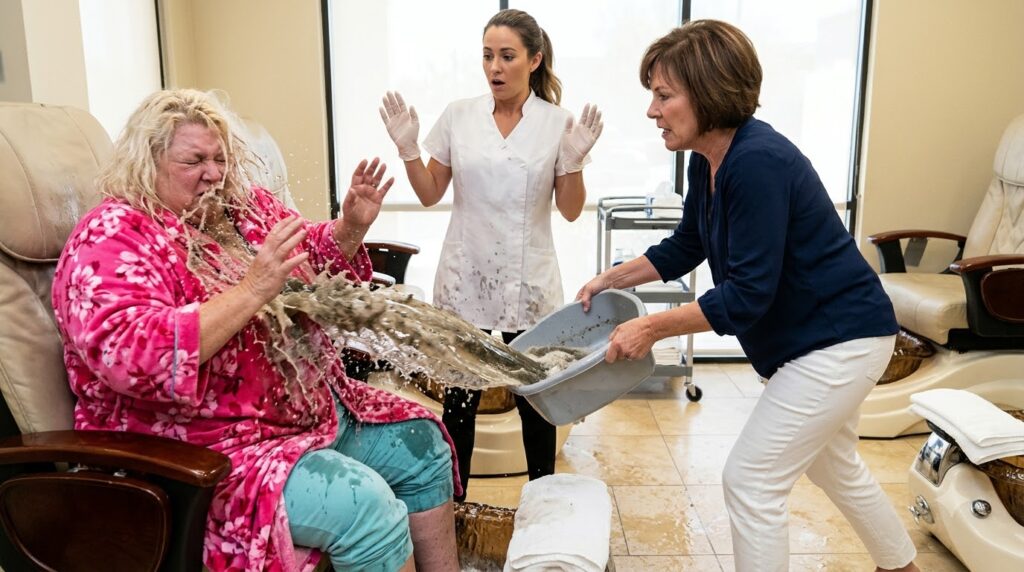
It also showed Karen deliberately splashing Vanessa after ordering her to kneel.
Richard acknowledged those findings.
But he remained concerned about Karen’s threatened lawsuit.
Daniel reminded him that an employer’s fear of litigation did not establish employee misconduct.
The discussion continued for nearly two hours.
Vanessa described the emotional impact of the incident.
She explained that being ordered to kneel had made her feel stripped of her professional identity.
She was trained in therapeutic foot care and spa services.
Her work required patience, skill, sanitation, and physical effort.
She was willing to wash a customer’s feet.
That was part of the service.
What she refused was the demand to perform that work as an act of submission.
The difference mattered.
Richard gradually understood that Vanessa was not objecting to the physical task.
She was objecting to the humiliation attached to it.
Melissa presented the earlier customer-service records.
She explained that employees had repeatedly raised concerns about Karen.
The company had responded by adjusting schedules, assigning different technicians, or offering complimentary services.
Those responses had protected the customer relationship.
They had not protected the employees.
Richard examined the documents.
For several minutes, he said nothing.
Then he asked Melissa why the complaints had never reached him.
Melissa answered carefully.
Some had been handled locally.
Others had seemed too minor to justify escalating.
But she also acknowledged that the management culture had encouraged employees to tolerate mistreatment rather than risk upsetting valuable customers.
Richard could not entirely blame her.
He had helped create that culture.
His emphasis on customer retention had been unmistakable.
The meeting ended with several decisions.
Vanessa’s unpaid leave would be reversed.
She would receive back pay for the missed shifts.
The company would remove the negative customer-relations notation from her personnel record.
Serenity Springs would also begin reviewing its procedures for handling abusive customers.
Vanessa felt relief.
But she was not finished.
She asked whether Karen would be permitted to return.
Richard hesitated.
The question was more complicated than he wanted to admit.
Karen had threatened litigation.
She was also a long-standing customer with influential connections.
Yet allowing her to return without conditions would send employees a clear message.
Their dignity remained negotiable.
Richard promised a decision within forty-eight hours.
Vanessa accepted the reinstatement but requested that she not be assigned to Karen again under any circumstances.
That request was approved immediately.
Outside the conference room, Melissa walked beside Vanessa toward the reception area.
The spa looked almost exactly as it had before the incident.
Sunlight streamed through the windows.
Soft towels sat neatly stacked.
The scent of eucalyptus drifted through the hallway.
Customers spoke quietly.
Everything appeared peaceful.
Vanessa knew how misleading appearances could be.
At the front desk, she noticed a young employee named Sophie organizing appointment cards.
Sophie was twenty-two and had recently joined the spa.
She smiled when she saw Vanessa.
Then she quietly admitted that Karen had once made her cry over a billing question.
Vanessa felt a familiar anger rise.
But this time, she did not feel powerless.
She understood that her case was no longer only about one humiliating appointment.
It was about whether the next employee would have to endure the same treatment.